
What romantasy and e-girls have in common

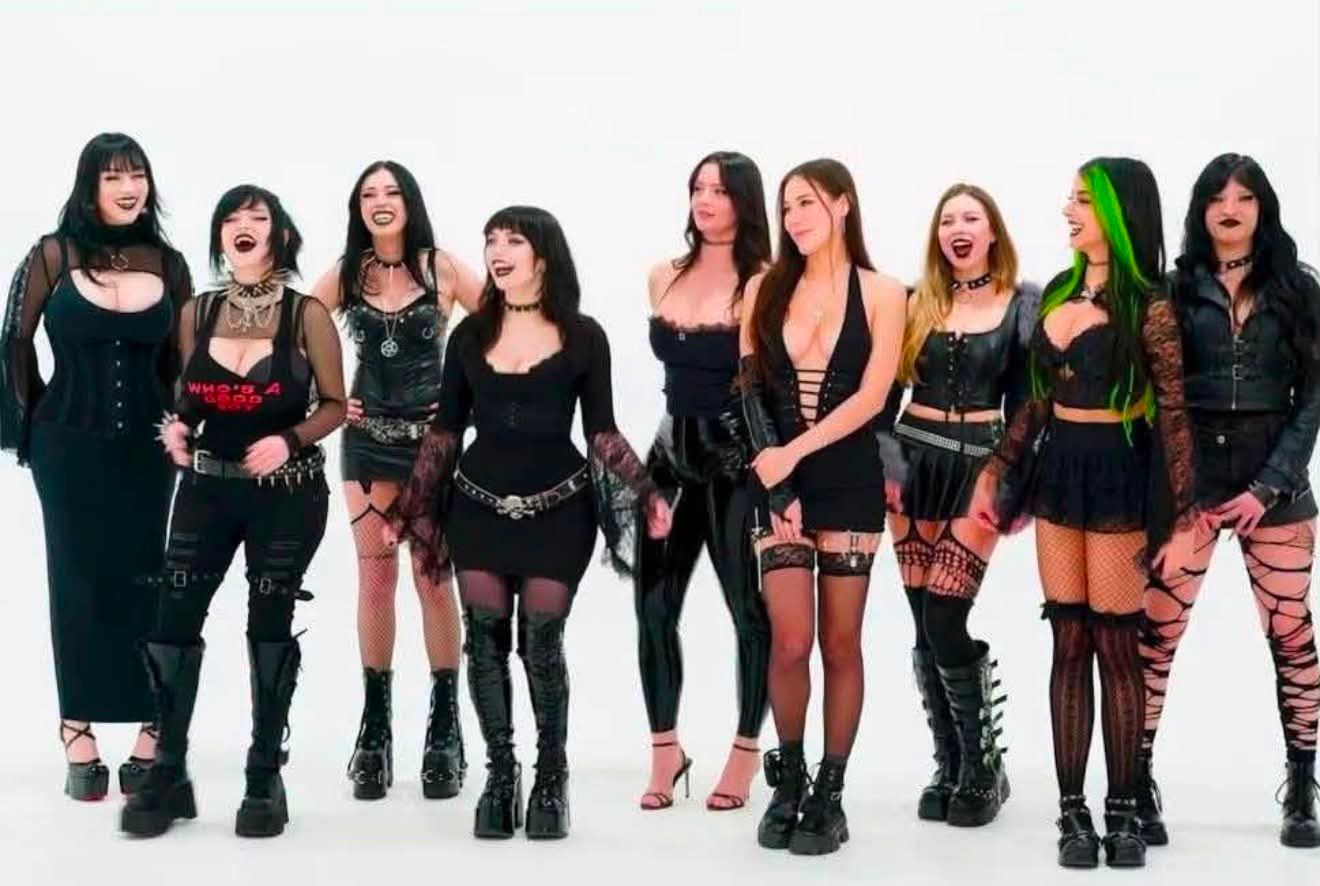
In 2009 Hiroki Azuma coined the term “database animal” to describe people who consume media based on a particular bundle of traits. While we're only now seeing the database animal become a global phenomenon, they've been around for ages. For as long as the internet's been searchable, rule 34 has existed for everything under the sun, for example.
I am not a goth — and technically, neither are any of the e-girls in this photo. Although they’re probably genuine in at least some aspect of their presentation, they are what all social media influencers are: personas, available online for anyone to parasocially bond with. (And probably sell you something.)
Surely, I hear you saying, these “fake goth girls” with their power to drain bespectacled boy-nerds’ wallets have nothing in common with romantasy, the literary genre geared towards women, endlessly memed on for its prevalence of “spice?” Surely, you say!
Both audiences are a different kind of "porn addict." Pornographic art is any work of art designed to manufacture desire — for a person, a product, or anything in between. The social media e-girl persona is both person and product. So is the enemies-to-lovers morally gray demon lord love interest that’s all but guaranteed to run the main character through in the first five chapters or less.
Links:
- I investigated the "fake goth girl" industrial complex (YouTube)
- Reclaiming Art in the Age of Artifice by J. F. Martel, 2025 (Bookshop)
- Otaku: Japan’s Database Animals, 2009 (Bookshop)


Member discussion